


On apparel, the same wording or design can be a trademark or mere decoration, depending on how it is used. The USPTO may issue an “ornamental refusal” when a specimen shows the applied-for matter used as a decorative feature on clothing rather than as a source identifier. See TMEP §1202.03 and §904.07(b).
How the USPTO evaluates ornamentation on apparel
Ornamentation is a perception question. Examining attorneys consider the size, location, dominance, and overall significance of the matter as used on the goods. A large slogan or logo across the front of a T-shirt, or other prominent graphics on apparel, can be perceived as decoration rather than branding.

Trenam design logo used as decoration on a shirt (non-trademark use). Use is merely “ornamentation.”
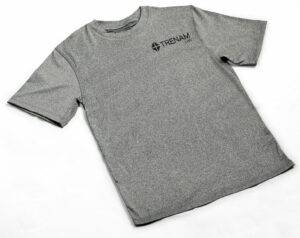
Shirt with Trenam branding on left breast. Logo used as a proper brand.
By contrast, consumers are accustomed to seeing trademarks on hang tags, inside neck labels, and discrete logos on the breast or pocket area. In practice, we often see a large center-chest print treated as decorative, while a small left-chest logo paired with a neck label is treated as trademark use.
What a strong clothing specimen should look like
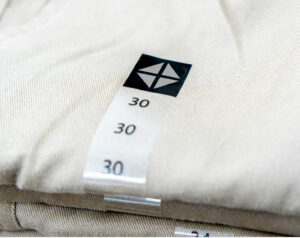
A specimen must show the mark as actually used on the goods in commerce, and the use has to create a clear connection between the mark and the product being sold. In practical apparel terms, that usually means the mark appears on something that functions as a brand identifier on the garment itself (or attached to it), like a neck label, waistband label, hang tag, or similar item.
Best practices for apparel specimens include:
- Sewn-in labels at the collar, waistband, or inside seam showing the mark.
- Hang tags or string tags attached to the garment.
- Branded patches (for example, above the back pocket or on a waistband).
- Discrete logos or wording on the breast or pocket area.


When specimens are required
Specimen requirements come up repeatedly in the life of a trademark:
- Section 1(a) (use in commerce): generally requires a specimen with the initial application.
- Section 1(b) (intent to use): the specimen is submitted later, with an Amendment to Allege Use (AAU) or Statement of Use (SOU).
- Post-registration: a Section 8 filing requires a specimen between years 5 and 6, and a combined Sections 8 and 9 filing requires a specimen at each ten-year renewal interval. See TMEP §1604.12 and §1606.
Failure to timely file and support these maintenance submissions can result in cancellation or expiration of the registration.
Consequences and response strategies
An ornamental specimen can delay or block registration. The USPTO identifies several response options, including submitting a verified substitute specimen showing proper trademark placement, claiming acquired distinctiveness under Section 2(f) (TMEP §1202.03(d)), establishing secondary source (TMEP §1202.03(c)), amending to the Supplemental Register (when available), or amending the filing basis to Section 1(b) (if an SOU has not been filed).
If you “roll back” from Section 1(a) to Section 1(b) to address a specimen problem, you lose the benefit of the Section 1(a) claim of current use, and registration will not issue until you later file an acceptable allegation of use (AAU or SOU) with a proper, non-ornamental specimen. TMEP §806.03(c). If the refusal cannot be cured and deadlines are missed, the application can be abandoned. For registered marks, improper use claims in maintenance filings can jeopardize the registration and can lead to deletions or cancellation if proof of use cannot be provided during USPTO audit procedures.
For guidance on apparel branding, specimen strategy, and USPTO responses, contact Trenam Law’s Intellectual Property Group for experienced, practical advice tailored to your clothing line.
